Search Results - Friedrich Nietzsche
Friedrich Nietzsche
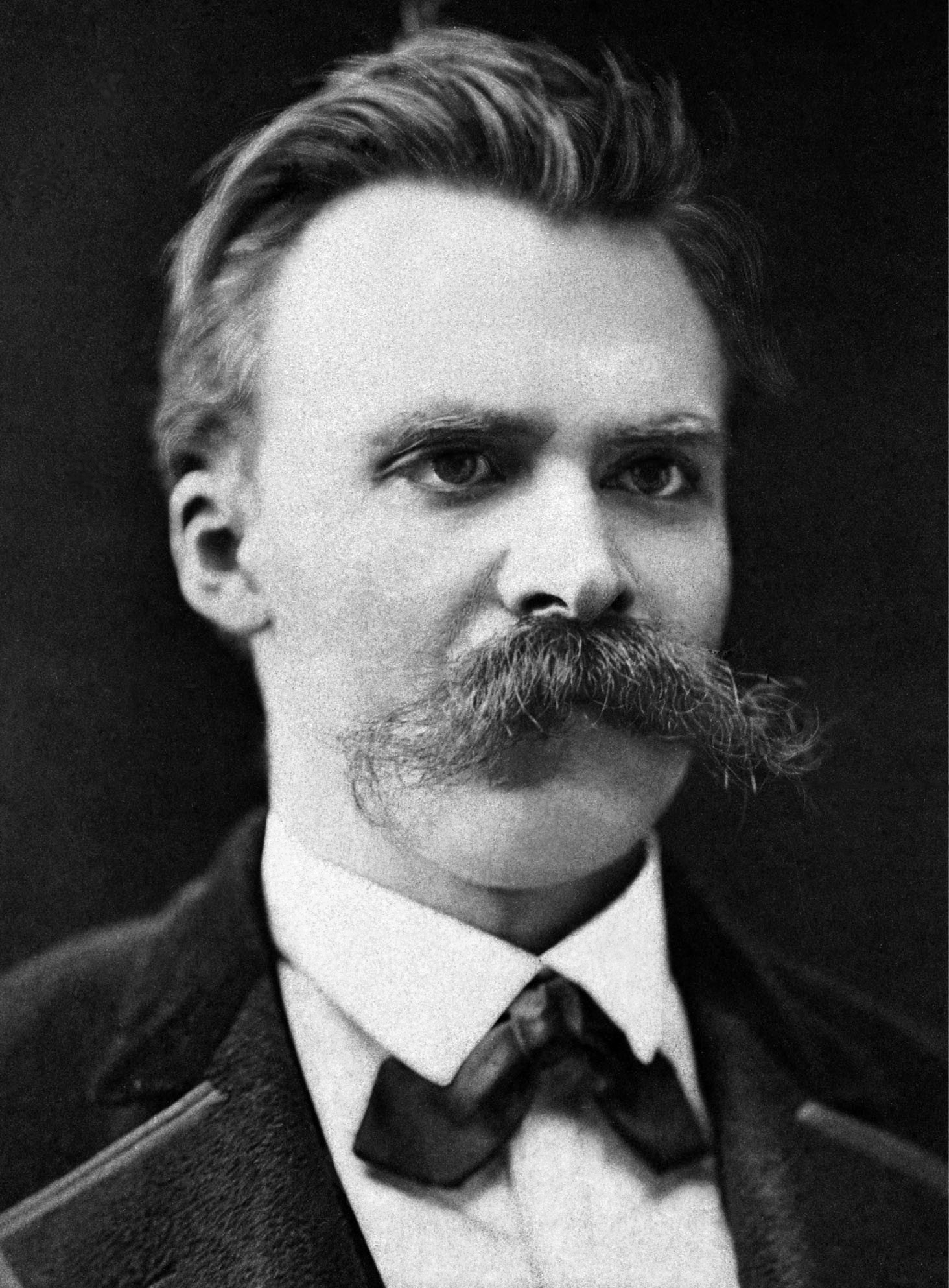 Friedrich Wilhelm Nietzsche ; or ;}} (15 October 1844 – 25 August 1900) was a German philosopher who started his career as a classical philologist and turned to philosophy early in his academic career. In 1869, aged 24, he was appointed Professor of Classical Philology at the University of Basel. Plagued by health problems for most of his life, he resigned from the university in 1879. He afterward lived as an independent writer, spending much of his life in relative solitude and financial insecurity while moving between Switzerland, Italy, and southern France in search of climates that might alleviate his condition, and in the following decade, he completed much of his core writing. In 1889, aged 44, he suffered a mental breakdown and thereafter a complete loss of his mental faculties, with paralysis and vascular dementia, living his remaining 11 years under the care of his family until his death. His works and his philosophy have fostered not only extensive scholarship but also much popular interest.
Nietzsche's work encompasses poetry, cultural criticism, and philosophical essays while displaying a fondness for aphorisms and irony. Prominent elements of his philosophy include the response of the Übermensch; his critique of truth in favour of perspectivism; a genealogical critique of Christian morality and a related theory of master–slave morality; the affirmation of life in response to both the weakening of religion and the crisis of passive nihilism which followed it; the notion of Apollonian and Dionysian forces; and a characterisation of the human subject as the expression of competing wills, collectively understood as the Will-to-power.
After Nietzsche's death, his sister, Elisabeth Förster-Nietzsche, became the curator and editor of his manuscripts. She edited his unpublished writings to fit her German ultranationalist ideology, often contradicting or obfuscating Nietzsche's stated opinions, which were explicitly opposed to antisemitism and nationalism. Through her published editions, Nietzsche's work became associated with fascism and Nazism. Twentieth-century scholars such as Walter Kaufmann, R. J. Hollingdale and Georges Bataille defended Nietzsche against this interpretation, and corrected editions of his writings were soon made available. The works of Nietzsche then renewed popularity in the 1960s and his ideas have since had a widespread impact on 20th- and 21st-century thinkers across philosophy—especially in schools of continental philosophy such as existentialism, postmodernism and post-structuralism—as well as art, literature, music, poetry, politics and popular culture. Provided by Wikipedia
-
1
-
2
-
3
-
4
Nietzsche y la política /
Published 2015“…Sociedad Española de Estudios sobre Friedrich Nietzsche…”
Get full text
Serial -
5
Nietzsche y su sombra : consideraciones sobre lo poético y lo artístico /
Published 2019“…Consideraciones Artísticas y Literarias en la Obra de Friedrich Nietzsche" Madrid, Spain…”
Digitalia Hispánica
Electronic Conference Proceeding eBook